
*Papers and presentation materials available as downloads below
Conference Keynote Speakers

Ansel Kebede Brown is Visiting Assistant Professor at North Carolina Central University (NCCU) School of Law. Brown became a faculty member in the law school in the fall of 2019. He presently teaches Legal Letters (International Law), Legal Research and Analysis, Legal Research and Persuasion, and Critical Thinking. His research focus is International Law and Pan-Africanism. Previously, Brown served as the NCCU Prelaw Advisor and Director of the University Honors Program. Prior to entering academia, Brown served as policy counsel at both the North Carolina Institute of Minority Economic Development and the Center for Responsible Lending, where he advocated for consumer protection laws aimed at reducing predatory subprime lending and rising student debt. Brown earned his bachelor’s degree from NCCU and his Juris Doctor from Harvard Law School. While at law student, he received the Dean of Students Community Leadership Award and served on both the International Law Journal and the Black Letter Law Journal. Brown is a member of the N.C. State Bar.
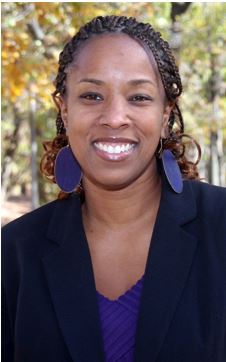
Mickie Mwanzia Koster is an Associate Professor of History in Africa and the African Diaspora at the University of Texas located in Tyler, Texas in the United States. She has a M.A. and Ph.D. in History from Rice University. She teaches a variety of undergraduate and graduate courses specializing in African American, and African histories and historiography. She regularly presents her research at conferences nationally and internationally. Additionally, she has published in peer reviewed journal articles, book chapters, dictionaries, encyclopedias, proceedings, and reviews on Kenya, Africa and the African Diaspora. Her manuscript, The Power of the Oath: The Making of Mau Mau in Kenya, 1952-1960 examines nationalism, ethnicity, and gender by exploring radicalized ritual ceremonies used during the Mau Mau war. She is also the co-author of Hip Hop and Social Change in Africa: Ni Wakati. She co-edited the two volume book series entitled, Kenya at Fifty: Challenges and Prospects since Independence. Currently, she is working on two projects examining the politics and culture of environmental change, development, and tradition in rural Kamba communities in Kenya.
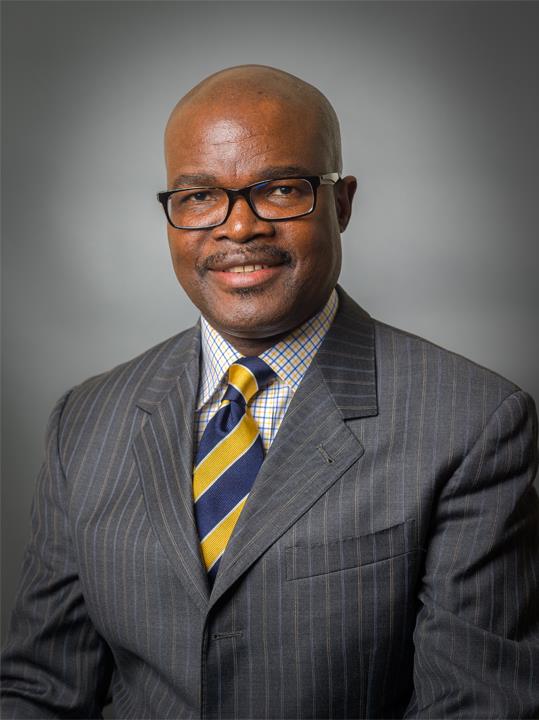
Paul Tiyambe Zeleza has been at a dozen universities in six countries on three continents and the Caribbean region. He held distinguished academic and senior administrative positions in Canada and the United States for 25 years before taking the position of Vice Chancellor and Professor of the Humanities and Social Sciences at the United States International University-Africa in January 2016.
In the early 2000s he worked as a consultant for the Ford and MacArthur foundations on their initiatives to revitalize higher education in Africa. His research project on the African academic diaspora conducted for the Carnegie Corporation of New York in 2011-12 led to the establishment of the Carnegie African Diaspora Fellowship Program in 2013 that has to date sponsored nearly 400 African born academics in the United States and Canada to work with dozens of universities in six African countries. He was President of the U.S. African Studies Association in 2008-2009.
He has published more than 300 journal articles, book chapters, reviews, short stories and online essays and authored or edited 27 books, several of which have won international awards. He has presented nearly 250 keynote addresses, papers, and public lectures at leading universities and international conferences in 32 countries and served on the editorial boards of more than two dozen journals and book series. He currently serves as Editor-in-Chief of the Oxford Bibliographies Online in African Studies.
He has received numerous international awards from major universities, among them the AMISTAD Award for Contributions to Africana Studies and Excellence in Scholarship, Distinguished Africana Award for Scholarly Excellence, Distinguished Academic and Leadership Award, Distinguished Africanist Award, Distinguished African Academic Excellence Award, and the Thabo Mbeki Award for Leadership. In July 2013, he was recognized in The New York Times as one of 43 Great Immigrants in the United States. In May 2015 he was awarded an honorary Doctor of Laws, honoris causa, at Dalhousie University for outstanding personal achievement. He currently serves on the Administrative Board of the International Association of Universities, the Advisory Board of the Alliance for African Partnership, as well as Chair of the Advisory Council of the Carnegie African Diaspora Fellowship Program, Chair of the Board of Trustees of the Kenya Education Network, and is a member of the University of Ghana Council.
Conference Introductory Speakers
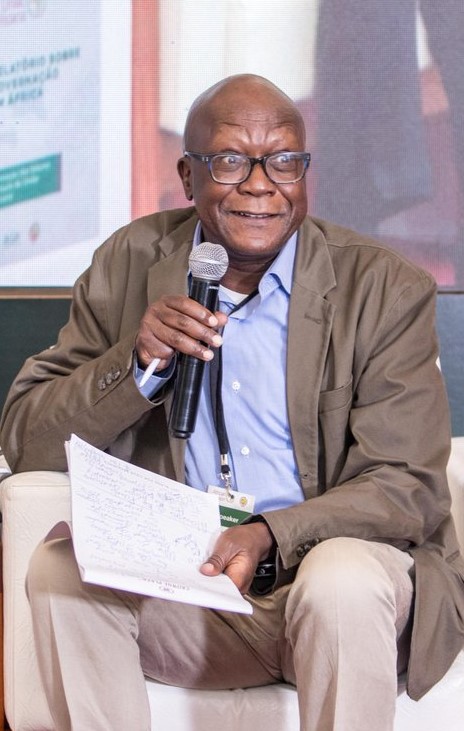
Gilbert M. Khadiagala is the Jan Smuts Professor of International Relations and Director of the Centre for the Study of the United States (ACSUS) at the University of the Witwatersrand, Johannesburg, South Africa. He previously taught African Politics, Comparative Politics, and International Relations at Kent State University, Kent, Ohio (1991-1997), and The School of Advanced International Studies (SAIS) at Johns Hopkins University, Washington D.C. (1997- 2006). Khadiagala holds a doctorate in International Studies from SAIS, an M.A in Political Science from McMaster University, Hamilton, Ontario, and B.A in Political Science from the University of Nairobi, Kenya. He has published widely on African politics, foreign policy, security, mediation, and conflict resolution. He is the recent editor of War and Peace in Africa’s Great Lakes Region (Palgrave-MacMillan, 2017) and author of Regional Cooperation on Democratization and Conflict Management in Africa (Washington DC: Carnegie Endowment for International Peace, 2018), and How Can Democratic Peace Work in Southern Africa? Trends and Trajectories after the Decade of Hope (Maputo: The Friedrich Ebert Stiftung, 2018).

Professor Jamie Monson became interested in Africa when she served as an agriculture volunteer for the Peace Corps in rural Kenya in 1980. She then completed her PhD in African History at UCLA, and took her first teaching position at Carleton College in 1991. In 2015, she accepted a position as a Professor of African History in the Department of History and Director of African Studies at Michigan State University. Monson’s early research focus was on agricultural and environmental history of southern Tanzania, and she has also worked on anti-colonial warfare in German East Africa. In the late 1990s, she began a new research project on the history of the TAZARA railway, built with Chinese development aid in Tanzania and Zambia in the 1960s and 1970s. Her book, Africa’s Freedom Railway, was published by Indiana University Press in 2011.
Most recently, Monson has been studying the history of China-Africa relations (and learning Chinese), and frequently performs research in China. Her new project is a study of technology transfer in the history of Chinese development assistance to Africa. A second project that she is also engaged in uses records of visits made by African women’s delegations to China during the Cultural Revolution to examine gendered aspects of civil diplomacy.

Dr. Gilbert Rochon serves as Co-Chair of the African Renaissance and Diaspora Network’s (ARDN) Higher Education Initiative & Chair of ARDN’s African & Diaspora Universities Research, Instruction & Engagement (ADURIE) Task Force. He is an Adjunct Professor at Tulane University’s School of Public Health & Tropical Medicine’s Dept. of Health Policy & Management and a Research Scientist with the Dept. of Public Health Sciences at Xavier University of Louisiana. Dr. Rochon was the 6th President of Tuskegee University and previously served as Associate Vice President for Collaborative Research & Engagement at Purdue University. Rochon received the Ph.D. in Urban & Regional Planning from the Massachusetts Institute of Technology (MIT), the Master of Public Health (MPH) degree in Health Services Administration from Yale University and the BA degree from Xavier University of Louisiana. Rochon was a United Nations University Fellow in Sudan, a Fulbright Senior Specialist in Thailand and was NATO country Project Director (NPD) for the Mediterranean Dialogue Earth Observatory in Morocco. He is an IEEE Senior Member and member of the African Association for Remote Sensing of Environment (AARSE). His prior federal government service includes appointments with NASA, US Naval Oceanographic Office (NAVOCEANO), USDA Forest Service and the US Environmental Protection Agency (EPA).
Conference Presenters

Vivian Chenxue Lu is a cultural anthropologist whose work focuses on capitalism and diasporic mobilizations amongst the Global South. Her first book project focuses on the politics of profit amongst the extensive migratory circulations of Nigerian traders across contemporary commercial sites of Africa, the Middle East, and Asia. Lu is currently an African Studies postdoctoral associate at Yale University and incoming Assistant Professor of Anthropology at Fordham University. Recent publications include “Agitating the State: Biafran Money, Memes, and Mobility” for the Nigerian magazine The Republic and articles for Africa is a Country, such as “Biafra—Nostalgia as Critique.”
Race and Notoriety in Diasporic Nigerian Life
Nigerian notoriety has emerged as a global national stereotype – particularly in relation to drug-trafficking and prolific scamming rackets – alongside global racial ones, that are ever present in Nigerian diasporic livelihoods in the Global South. Both popular and academic accounts of Nigerians in places such as South Africa and China often cast Nigerian migrant men as prone to criminality, aggression, and excessive ostentation. This paper critically examines how global racial processes become entwined with nationality, ethnicity, class, and gender. Drawing from ethnographic fieldwork as an Asian American researcher amongst Nigerians in the Global South, I consider ethnographic scenes where Nigerian migrants talk about personal risk in relation to global structural inequalities and the centrality of state profiling in black migrant experience. In particular, this paper explores how the transnational visibility of anti-black state violence through globalized media and social media networks reframe how migrant Nigerians drew constellations of evidence and patterns of interpretation for race and blackness across the world. Drawing from ethnographic fieldwork during the 2014 Ebola outbreak, I reflect on how Covid-19 discourses have similarly animated xenophobic racial ones in contemporary diasporic life.

Benji Shulman is a broadcaster, activist and independent scholar from Johannesburg, South Africa. He holds a Bcom in Marketing and an Msc in Geography, both from the University of the Witwatersrand. For more than decade, most of his work has involved fostering better relations relations between the South African Jewish community and the broader South African and African diaspora communities. This includes work in areas such as policy formulation, organising campaigns against racism, xenophobia, and anti-Semitism and hosting interfaith, intercultural, youth, entrepreneurship and environmental events. He has published essays on the history of Jewish and African relations in the Jewish Affairs Journal and in commentary websites in Israel and the United States. In addition to this, he hosts a weekly current affairs show on 101.9 Chaifm.
Contributions and Cooperation: Jewish and African Diasporas and the National Liberation Project Before Independence
The period between the 1950s and 1960s saw a vast increase in the diplomatic activity between the state of Israel and a variety of Africans states. The period has been the subject of considerable academic review. Most of analyses of the period tend have a common thread in that they privilege the state as the unit of analysis and look to geopolitical and real politic considerations as the major driver of these interactions. This means of viewing the period is useful and entirely justified. However, it is also limited. To start with, the analysis is fairly ahistorical suggesting that relations begun for a “standing-start” and were essentially a result of the formal independence and de-colonisation process. Secondly, this view is not very helpful to our current context where, as scholars have noted, the state is not the only, or, in some cases, even the primary driver of diplomatic relations and where geopolitical considerations from that period have essentially ceased to exist. What is needed are added lenses that can assist in nuancing the state/real politic view of relations. One good lens that we can use this is purpose is that of diaspora. What this presentation will track is the nearly half a century of co-operation between African and Jewish intellectuals and activists based almost entirely in the diaspora, most notably Europe and America. It will show that early diaspora interactions not only paved the way for co-operation between African and Jewish intellectuals and activists based almost entirely in the diaspora, most notably Europe and America. It will show that early diaspora interactions not only paved the way for co-operation after independence but set the conceptual agenda for engagement that continues to frame relations despite changes in regional geopolitics.
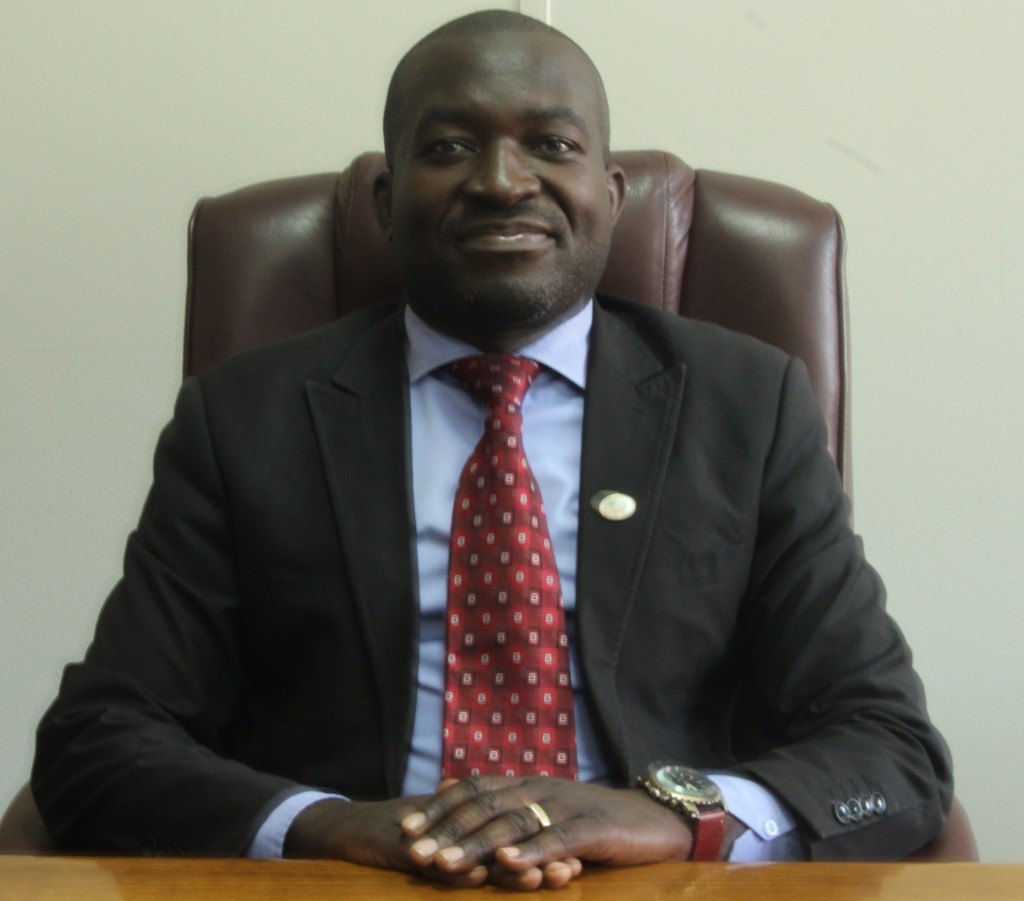
Tapiwa Mucheri is an economist with more than ten years’ experience specializing in investment, trade, diaspora-migration, marketing and business development fields. He has worked extensively in both the private and public sector. In the public sector Mucheri has been instrumental in policy design-formulation, programmes coordination and promotion of diaspora-migration, investment and trade activities. Furthermore, he has produced several position papers and concept papers that have contributed immensely on policies on economic, diaspora-migration, investment and trade issues in Zimbabwe and the region. He is currently awaiting the publication of his paper on diaspora welfare, which he co-authored with Munyaradzi Dzvimbo. Mucheri is a proud holder of a MSc in International Trade Policy and Trade Law obtained from Lund University (Sweden) in collaboration with Trade Policy Training Centre in Africa (TRAPCA). He also graduated with a Bachelor of Commerce in Business Management and Economics before attaining a Bachelor of Commerce (Hons) in Economics from Rhodes University in 2008.

Munyaradzi A. Dzvimbo holds a Masters in Social Science in Development Studies from Lupane State University in Zimbabwe. He holds a Bsc (Honours) in Development Studies from Zimbabwe Open University (ZOU) and a Diploma in Education (English & History) from University of Zimbabwe. He is a former high school teacher with more than a decade of teaching experience inspired by the environment he has worked in and has also taught regionally in Botswana, Swaziland and South Africa. He had a short stint at Community Capacity Building Initiative Centre for Africa (CCBICA) in Kadoma working with various sectors of the society for conservation of the environment, nutrition and capacity training as a researcher. Munyaradzi’s research interests are sustainable development, climate change, rural development, gender, education, agriculture, environment, food security and livelihoods.
Diaspora and Global, Regional, National and Local Policies and Strategies
The growth of the diaspora community across the globe has prompted governments to come up with policies and strategies that seek to tap into the diasporic economy for social, financial, human and intellectual capital. This means that there is a growing realization of the development potential of diasporas. This paper therefore explores how governments’ policy agenda and focus strikes a balance between the expectations and interests of the diaspora community with the country’s development thrust and aspirations. Essentially, the paper aims to examine the extent to which demands, interests, development needs and lobbying from the diasporas, as individuals and collective actors, are co-opted into international, regional and domestic diaspora policies. The research is premised on the ex-prior assumption that if diasporas are consulted and involved in national development policies and plans, they can effectively unleash their development potential. Multiple surveying techniques consisting of on-the-field and on-line surveys will be applied and these will be complemented by a meta-analysis of diaspora engagement in policy design and realisation. Responses will be collected from Zimbabwean diasporas, officials from International Organization for Migration (IOM Zimbabwe), focal persons of the African Union’s Citizens and Diaspora Organization (CIDO), returnee diasporas as well as government officials. Through its findings, this paper seeks to contribute to the advocacy for inclusive participation of the diaspora in national discourse as well as lobby for inclusion of their demands, development needs and interests in global, regional, national and local policies.
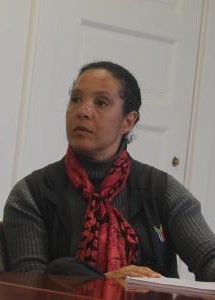
Krista Johnson is an Associate Professor and Director of Graduate Studies in the Department of African Studies at Howard University. She is also co-convenor of the HU Women and Gender Studies Collective. She received her Ph.D. in Political Science from Northwestern University, and has published on a wide range of topics including health policy, gender and HIV prevention and global health governance in Africa. Her current research is on the scholarship of Howard University faculty in the 1930s-1950s on race, imperialism and the international system and the unique brand of black cosmopolitanism they represented. She has lived and traveled extensively throughout southern Africa, completed a Fulbright Fellowship in 2012 at the Centre for the Study of HIV and AIDS at the University of Botswana, and has been a visiting scholar at the University of Cape Town and the University of the Western Cape.
Pioneering the Social Sciences from the Periphery: Howard University 1930-1950
This paper focuses on Howard University and a distinguished group of its scholars who, in the 1930s through 1950s across various fields of social science, broke away both from the mainstream U.S. disciplinary approaches of the time and from the institutional limitations of black universities to engage in transformative scholarship and intellectual theorizing on race and empire in the United States and around the world. These ‘race men and women’ included Alain Locke, Rayford Logan, Ralph Bunche, E. Franklin Frazier, Eric Williams and Merze Tate. They were scholar-activists and public intellectuals who shaped public discussion about race, built a vibrant intellectual community, and participated in an animated global subaltern network. In areas like Sociology, International Relations, History and Philosophy, this group of black scholars of Howard University expressed ideas and theories that had in common the foregrounding of the black experience in the U.S. and the world more generally.
Robert Vitalis (2015) refers to this constellation of black intellectual leaders as “the Howard School”. His work, a disciplinary history of the field of International Relations, is part of a growing body of scholarship on the genesis of American social sciences, the centrality of race, racism, and imperialism to the core theorists and theories of the incipient academic fields, as well as the contributions of black scholars to the early foundations of the U.S. social science disciplines. (Magubane, Lentin, Morris 2015, Vitalis 2015, Blatt 2018). This paper builds on the work of Vitalis who demonstrates that these scholars embraced ‘a project of liberation [which] was from its inception (and by necessity) a world-spanning political and theoretical movement in response to the theory and practice of white supremacy’. (Vitalis, p. 2) They were unique among their generation of professors for the relationship they forged with liberation activists and theoreticians, and the future leaders of independent Africa and the Caribbean nations.
Instead of emphasizing the intellectual contributions of the Howard scholars, this paper roots this intellectual history in the institutional architecture they forged at Howard at the time. I argue that, as part of a larger effort to confront the coloniality of knowledge and forge an academic and activist decolonial agenda, the Howard scholars established institutions and academic spaces of knowledge production that were unique in the American academy in their organization, mission, vision and methods of research, and played a vital role in sustaining critiques and alternatives to mainstream thinking on race. The Howard scholars sought to establish an African American counter-public sphere that could shape public opinion within the black community but also the broader American society.
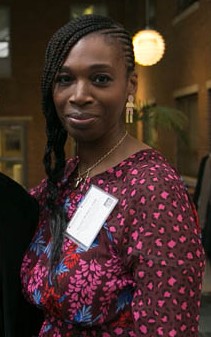
Tracey L. Walters is an Associate Professor of Literature in the Department of Africana Studies at Stony Brook University where she also holds an affiliate appointment with the Department of English, and Women’s and Gender Studies. Dr. Walters has published numerous articles on Black women’s literature and three books: African American Women and the Classicists Tradition: Black Women Writers from Wheatley to Morrison (2007), an edited collection Zadie Smith: Critical Essays (2008), and an ebook Zadie Smith (2012). Forthcoming: Not Your Mother’s Mammy: The Representation of the Domestic in Transatlantic Media (Rutgers Press), and Zadie Smith Decoded (forthcoming). Walters is a co-host of the podcast: Black Girls with Accents.
Social Justice in Black Britain and the Demand for Recognition
When the first generation of British born blacks came of age in the 1960s and 1970s, their ability to affirm an authentic British identity and establish a sense of belonging was compromised by a national discourse about race dominated by the xenophobic rhetoric of conservatives like Enoch Powell, and others, who propagated the notion that foreigners, especially those from the Caribbean and Asia, were contaminating British identity and draining state resources. This growing anti-black sentiment along with mass unemployment, increased crime, and the austerity measures of the Thatcher administration made British blacks scapegoats for the nation’s social problems. In contrast to previous generations who, keeping their sights on returning home, learned to ignore the racist insults they encountered in their daily lives, a younger culturally hybridized generation of Black Britons was unwilling to endure the quiet suffering of their parents – as represented in novels like Sam Selvon’s Lonely Londoners (1956). After all, they were no longer simply dealing with name-calling, hostility in public spaces or discriminatory practices in the workplace. Instead, they encountered routine violence at the hands of the police and targeted attacks by hate groups like the skinheads. Unlike their parents, Britain was their home and they wouldn’t be passive. They mobilized to form radical social justice groups such as The Black Eagles and The Black Panther Party to fight back against injustice and oppression, and in the revolutionary poetry of Linton Kwesi Johnson let the world know “Inglan is a Bitch” (1980). Almost 40 years later, as Brexit and the public discourse around immigration and the right to claim “Britishness” resurfaces, third, and fourth generation born children still find themselves questioning their belonging in British society (as represented in fictional works by Zadie Smith, Bernadine Evaristo, Diran Adebayo etc.). As institutionalized racist practices ensue (Windrush repatriation), and routine acts of violence against blacks at the hands of law enforcement continue to go unchallenged, some Blacks find it difficult to truly feel British when living in a community that is constantly under assault. Young black Britons are again, to hearken Paul Gilroy, feeling like “there ain’t no black in the Union Jack,” and courageously pushing back against. This paper discusses their efforts to mobilize and form groups like London Black Revs and Black Lives Matter UK not only decry injustice and oppression, but also address the struggle of laying claim to a British identity in a country which routinely marginalizes its black citizens. Drawing from cultural criticism, poetry, and interviews, this paper underscores the reality that for many Black Britons feeling British and being accepted as British are not mutually exclusive.

Paul Schauert is currently an Assistant Professor at Michigan State University in the Center of Integrative Studies in Arts and Humanities. He holds a PhD in folklore and ethnomusicology with a minor in African Studies from Indiana University. He is primarily interested in the intersections of music, dance, nationalism, politics, and self-fashioning in Africa and its diaspora. Dr. Schauert examines these issues in his book: Staging Ghana: Artistry and Nationalism in State Dance Ensembles, published in 2015 by Indiana University Press. This work explores the ways in which members of Ghana’s national dance troupes manage their dual positions as state employees and private citizens, harnessing available resources to turn the rhetoric and institutions of nationalism to their advantage as they seek self-improvement. Dr. Schauert has also published numerous scholarly articles and reviews while remaining an active musician and composer. He has taught classes on African and African diasporic music and culture, world music, popular music, and global jazz as well as folklore, fairytales, immigration narratives, and global cities. His current research focuses on the artistic collaborations between African immigrants and African Americans in Detroit as they co-produce diasporic stage performances that filter imaginings of Africa through the lens of radical black politics.
Staging ‘Afrotopias’: Performative Collaborations between Old and New African Diasporans in Detroit
While there is an emerging discourse regarding “new” diasporic African communities in the U.S., far less attention has been paid to their interactions with African Americans (i.e., “old” African diasporans), particularly vis-à-vis the performing arts. Focusing on the Ngoma Za Amen-Ra New Afrikan Dance Theatre, this paper explores how old and new African diasporans co-created stagings of “Afrika” in Detroit during its post-rebellion period (1967-present). By detailing the creative collaborations between African Americans and recent African immigrants in this ensemble, I show that these communities co-produced performances that engendered diasporic consciousness for both groups, reimagining meaningful, yet discrepant, senses of self, history, and “the motherland.” That is, while these communities work together to stage “Africa,” their motivations, values, and orientations to the continent vary widely, resulting in divergent representations of it. I demonstrate that African Americans, having been largely cut off from specific familial, ethnic, and experiential continental connections, resonate with more mythical pan-African representations of the continent that filter African traditions through diasporic imagination and the revolutionary politics of the Black Power and Civil Rights movements to produce an “Afrotopian” vision of the continent, which is often referred to as “Afrika” by local artists. On the other hand, new African immigrants, having ties to specific nationalities, ethnicities, and histories, stage Africa in more idiomatic ways that reference particular heritages; yet, African immigrants still often play into stereotypes of the continent and its people to appeal to diasporic audiences, similarly resulting in representations that perpetuate idealized “Afrotopian” fantasies. In all, such variation in aesthetic and ontological orientations and practices have co-produced Afrotopian stagings of Africa/“Afrika” in America that are both products of, and generative forces for, a politically-charged black diasporic consciousness, which transforms senses of place, self, and history for these artists and their audiences.

 Africa-US Forum